

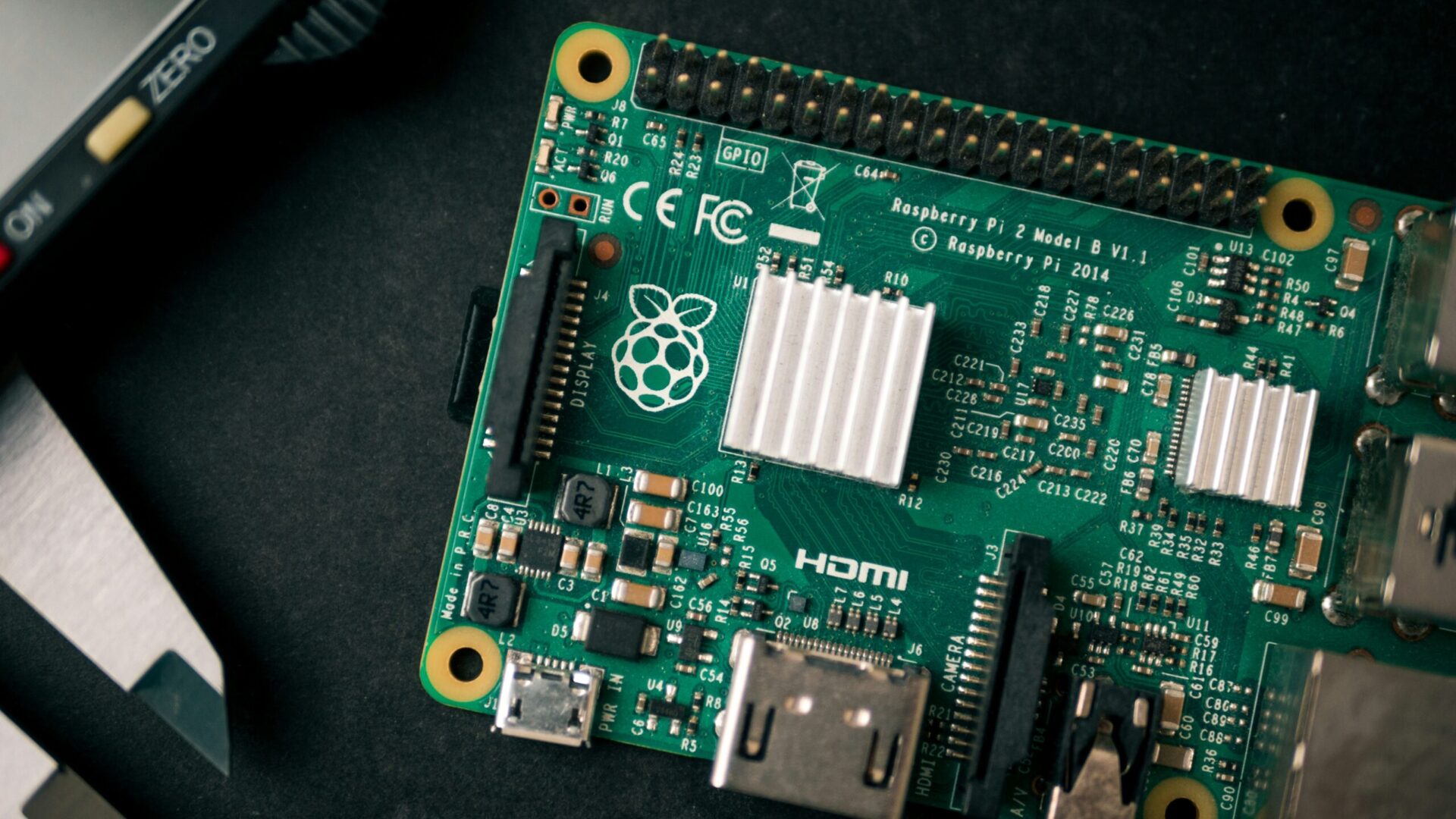
Photo by Harrison Broadbent on Unsplash
Raspberry Pi CM4 in Industrial Controllers: Strength, Limits, Reality Check
Yes, the Raspberry Pi Compute Module 4 is a genuinely credible choice for industrial controllers, but only when it’s the CM4 specifically, not a standard Raspberry Pi 4 board, and only when it’s designed into hardware built for the environment it will actually run in. The distinction matters more than most product pages let on.
CM4 vs standard Raspberry Pi 4: not the same decision
A standard Raspberry Pi 4 is a consumer single-board computer: microSD storage, HDMI, USB-C power, exposed GPIO pins, and a form factor meant for a desk, not a cabinet.
The Compute Module 4 is the same core silicon, a Broadcom BCM2711 quad-core Cortex-A72 running at 1.5 GHz, packaged as a solderable module without the consumer-facing connectors. That single change is what makes industrial designs possible: manufacturers can put the CM4 on a custom carrier board with eMMC storage instead of a failure-prone SD card, isolated industrial I/O instead of exposed GPIO, and a DIN-rail form factor instead of a bare PCB.
In other words: the CM4 isn’t an industrial processor by itself. It’s an industrial-*capable* processor that becomes an industrial controller only once it’s designed onto the right carrier board.
What the CM4 genuinely brings to industrial work
- Real compute headroom. A quad-core Cortex-A72 at 1.5 GHz comfortably runs Node-RED, a local MQTT broker, an OPC UA server and light data processing simultaneously, workloads that would strain a typical microcontroller-based PLC add-on.
- A mainstream, well-supported OS. Running Debian (Raspberry Pi OS) means access to the full Linux tooling ecosystem, package managers, standard networking stacks, widely documented libraries, rather than a proprietary RTOS with a small community.
- eMMC storage options, avoiding the single biggest reliability weak point of consumer Pi boards (SD card wear and corruption) when the carrier board is designed to use it.
- PCIe and native Gigabit Ethernet on the module itself, giving carrier board designers room to add dual Ethernet, NVMe expansion, or additional interfaces without external bridging chips.
How SENSBLUE ATLAS is built around this
ATLAS uses the CM4 (2GB or 4GB RAM, 32GB eMMC) specifically to get the compute and OS advantages above, while the carrier board supplies everything the module doesn’t: 12 DIO, 6 AIO, 2 relays, 2 load-cell inputs, RS-485, CAN, dual independently-managed Ethernet, galvanic isolation on the field-side I/O, an operating range of -10 °C to +60 °C, and DIN-rail mounting in an IP20 enclosure. The result is a board that keeps the CM4’s software flexibility while behaving like industrial hardware on every axis that matters in a cabinet.

FAQ´S
Is a Raspberry Pi CM4 reliable enough for 24/7 industrial use?
The module itself is widely deployed in commercial and industrial products; reliability in practice comes down to the carrier board, power protection, storage choice (eMMC vs SD), thermal design and I/O isolation, more than the module’s inherent quality.
Can a CM4-based gateway run real-time control?
It can run soft real-time logic (monitoring, alerting, non-critical control) reliably, but it isn’t a substitute for a certified PLC where hard real-time guarantees and safety certification are required.
Why not just use a standard Raspberry Pi 4 instead of the CM4?
The CM4’s solderable module format lets manufacturers design in eMMC storage, industrial connectors and isolated I/O directly onto a custom board, something not possible with the standard Pi 4’s fixed consumer form factor.